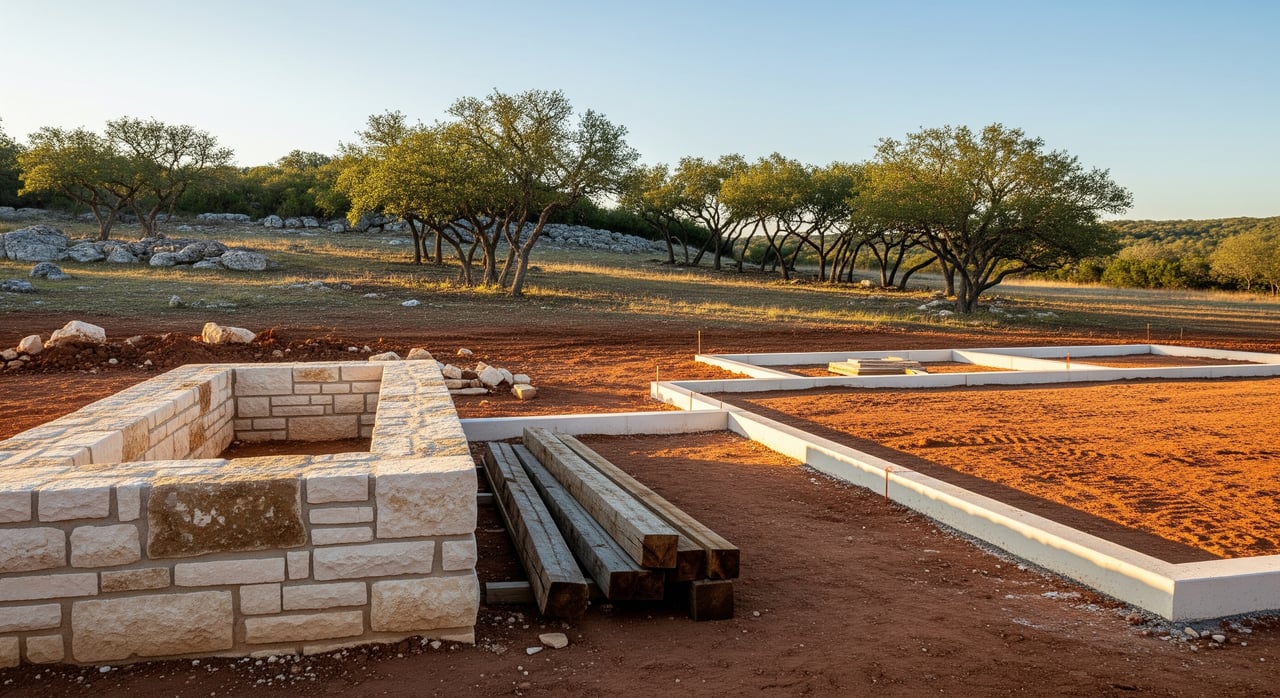
Buying acreage at Wolf Creek Ranch and planning a custom build raises one big question: should you finance the lot now and build later, or wrap land and construction into one loan? You want to secure the right tract without overpaying in fees or timelines. In this guide, you’ll learn how land loans and construction loans differ, what lenders look for at Wolf Creek Ranch, and the local checks that can make or break approval. Let’s dive in.
Wolf Creek Ranch basics that affect loans
Wolf Creek Ranch is a gated Hill Country acreage community in Burnet County near FM 2341 and Lake Buchanan. Listings commonly mention large tracts, equestrian features, trails, a pavilion, and a helipad. Many lots have electricity nearby but require a private well and septic system. Several parcels also reference a community grazing lease tied to an agricultural appraisal; verify details with the seller and the county appraisal district.
These details matter because lenders treat raw or partially improved acreage differently than finished subdivision lots. Utilities, septic feasibility, and legal access influence your down payment, rates, and whether a lender will approve a single-close construction loan or require a staged approach.
Land loans: how they work
How lenders view WCR land
If your lot needs a well and septic, many lenders consider it raw or unimproved land. That raises perceived risk. Improved lots with utilities and recorded access are easier to finance.
Typical costs and terms
Expect larger down payments and higher rates than a standard mortgage. Guidance on land financing often shows down payments from roughly 20% to 50% depending on the lot’s condition and your profile, with raw land near the higher end. Terms can be shorter and may include balloon or interest-only features. See an overview of land-loan norms in this consumer guide from Bankrate’s summary source on land loans. Learn how land loans typically price and underwrite.
Pros for WCR buyers
- You can secure a specific tract now and take time to finalize plans.
- You are free to complete site evaluations, septic design, and well planning before building.
- You may maintain any advertised ag appraisal benefits while you plan, if applicable and verified.
Cons to weigh
- Higher upfront cash and carrying costs.
- You will arrange separate construction financing later, which means new underwriting and fees.
- Some construction lenders require land seasoning (time owned) before rolling the lot into a construction-to-permanent loan.
Construction loans: how they work
Two ways to structure
- Two-close financing: you use a short-term construction loan to fund draws, then refinance into a permanent mortgage after completion. See the basics of construction financing structures.
- One-time close (construction-to-permanent): the lender underwrites construction and your permanent mortgage at the same time, then converts automatically at completion. Review how one-time-close loans operate.
What lenders require
Construction-to-permanent loans usually expect strong credit, reserves, a licensed approved builder, fixed-price contract, stamped plans, and a detailed budget and draw schedule. See common documentation and builder approval needs. Down payment targets often sit near 20% of the total project cost, although certain programs may allow less with eligibility limits. Explore typical down payment expectations.
Payments during the build
Your payments are usually interest-only on funds drawn during construction. When the home is complete, the loan converts and you pay principal and interest based on your permanent terms. Here’s how one-time-close payments typically work.
Pros for WCR buyers
- Single underwriting and closing, which can reduce duplicate fees.
- Often allows you to lock the permanent rate upfront.
- Built-in draw management and clear milestone inspections.
Cons to weigh
- Stricter requirements for plans, permits, and builder approval.
- Raw or unserved lots can be limited by program rules or require more equity.
- Some programs impose lot eligibility or seasoning rules. Check program-specific limits and lot requirements.
Burnet County checks that affect approval
Water and wells
Many WCR tracts will need a private well. Lenders and appraisers look for a reliable domestic water source. Get facts on well testing, drought advisories, and water quality from the Central Texas Groundwater Conservation District. See local well testing and advisories.
Septic and OSSF permits
Burnet County requires a site evaluation by a licensed professional and an OSSF permit for septic. This step verifies soil suitability and system type. Lenders often want documentation that a permitted system is feasible before permanent financing. Review the county’s OSSF process and requirements.
Floodplain and elevation
Some parcels may include creeks or low-lying areas. Check FEMA maps and county floodplain rules early since insurance and foundation elevations can change costs and lender conditions. Visit the county floodplain information page.
Access, platting, and HOA
Confirm recorded access, legal lot status, and community restrictions. Ask for the recorded plat, CC&Rs, fee schedule, and any grazing lease documents. These impact insurance, taxes, and lender disclosures.
Decide: land loan or construction loan?
Choose a land loan if:
- You want to secure a specific WCR tract now and design later.
- The parcel is raw and you need time for well, septic, and feasibility work.
- You can handle a larger down payment and a second round of financing later.
Choose a construction-to-permanent loan if:
- Your lot is clearly buildable and you have a licensed builder and fixed-price contract.
- You want a single close, potentially with a permanent-rate lock.
- You are ready with plans, budgets, and permit-ready documents.
Two common pathways for WCR buyers
A) Buy now, build later
- Use a land loan or seller financing to purchase the tract. See typical land-loan requirements.
- Complete your licensed site evaluation, septic design, and well feasibility. Follow Burnet County’s OSSF steps.
- When plans are final, apply for a construction-to-permanent loan and confirm any land seasoning rules with your lender. Check common construction-to-perm expectations.
B) One-time-close, purchase plus build
- Select a lender that offers single-close loans for both the land purchase and build. Understand the one-time-close process.
- Submit your builder contract, plans, budget, and permit-ready documentation. The loan funds draws during construction, then converts to your permanent mortgage.
Your WCR prep checklist
- Recorded lot, legal access, and plat.
- Utility plan: electric availability, well feasibility, and septic path.
- OSSF site evaluation and septic design steps. See county OSSF guidance.
- Water quality and well data from CTGCD. View CTGCD resources.
- HOA/POA rules, CC&Rs, fees, and any grazing lease documents.
- Builder selection with a fixed-price contract and draw schedule. Check typical lender documentation.
- Lender program comparison, including down payment, rate locks, lot eligibility, and seasoning. Review common program limits and rules.
Final thoughts
There is no one-size-fits-all answer at Wolf Creek Ranch. If you want flexibility and time to plan, a land loan can make sense. If you are ready to build on a clearly feasible lot, a single-close construction loan may save time and fees. Either way, your early due diligence on wells, septic, access, and permits will streamline approvals and protect your budget.
If you value a clear, concierge-style process for complex land and new-build decisions, connect with Park City | Deer Valley - Estates for a thoughtful, client-first conversation.
FAQs
What is the main difference between a land loan and a construction loan?
- A land loan finances the lot only, often with higher down payments and shorter terms, while a construction loan funds the build and then converts to a permanent mortgage when the home is complete. See a construction-loan overview.
How big is the down payment for WCR land or a custom build?
- Land loans often require 20% to 50% down depending on the lot’s condition and lender. Construction-to-permanent loans commonly target about 20% of total project cost, with program-based exceptions. Review common down payment ranges.
Can I finance a WCR lot that needs a well and septic?
- Some lenders will finance raw land with higher down payments and rates. For construction financing, lenders usually want proof that a permitted septic and a reliable water source are feasible. Read Burnet County’s septic requirements and check CTGCD water guidance.
What documents do construction lenders want before closing?
- Expect a licensed builder approved by the lender, a fixed-price contract, finalized plans, a budget and draw schedule, and evidence you can permit the home and septic. See typical construction-loan documentation.
Is a one-time-close loan better than doing two loans?
- One-time close can reduce duplicate fees and lock your permanent rate, but it requires readiness with builder, plans, and lot eligibility. A two-close approach can be more flexible if you want to buy the lot now and design later. Compare one-time-close basics.