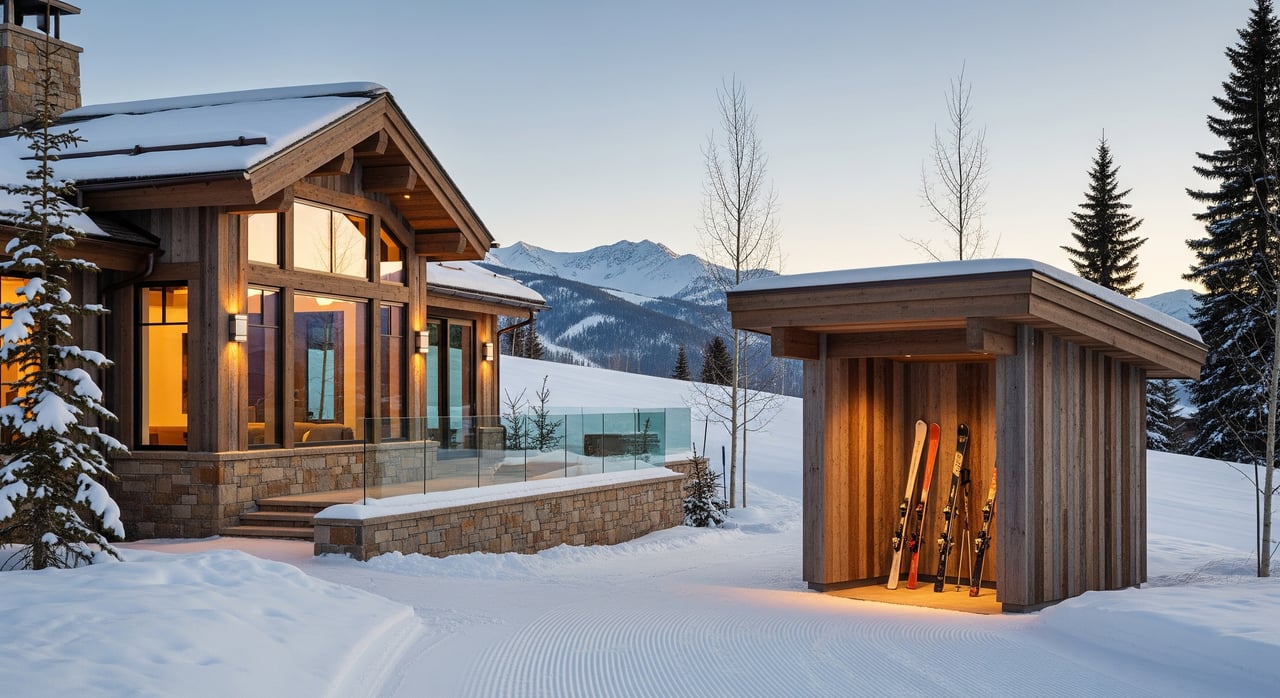
Is “ski-in/ski-out” really as simple as it sounds? In Deer Valley, the term is prized and often used, but it does not always mean the same thing from one listing to the next. If you want the ease of clicking into your skis at the door, clarity matters.
In this guide, you’ll learn how Deer Valley professionals define true ski-in/ski-out, how it differs from slope-side or ski-access, and the exact items you should verify before you buy. You’ll also get a practical checklist and an agent brief you can copy and use to source the right properties. Let’s dive in.
What “ski-in/ski-out” really means
True ski-in/ski-out
True ski-in/ski-out means you can put skis on at your unit, door, or garage and glide onto a maintained run or connector that leads to a lift or the resort trail network. You should not need to cross a public road or use a car or shuttle. This is the highest level of convenience.
Slope-side or ski-access
Slope-side or ski-access often means the home or building sits near the terrain, but you may need a short outdoor walk, stairs, a deeded connector, or a path to reach a groomed run or lift. Some listings marked this way can feel easy day to day, others less so. Always ask for the actual route in winter conditions.
Why terms get fuzzy in listings
Marketing often uses “ski-in/ski-out” broadly. The only way to know what you are getting is to verify the specific path, the recorded access rights, and how the route is maintained in winter. Small details like stairs or a road crossing can change how the property lives.
Deer Valley specifics that shape access
Grooming and snowmaking priorities
Deer Valley is known for careful run management and extensive grooming, which supports reliable connectors during the season. Groomed routes and snowmaking near base areas improve early and late season usability. Remote trails without snowmaking may be less reliable in thin conditions.
Base areas and trail map matter
Deer Valley has multiple base areas and lift clusters. The specific lift, run, and connector names on the current trail map matter when you evaluate a property. A short, groomed connector to a lift can feel very different from a steeper, intermediate-only link.
Skier-only policy and demand
Deer Valley admits skiers only per resort policy. This shapes the guest experience and demand for ski-access properties in this market, and it is part of the lifestyle many owners value.
Six types of ski access in Deer Valley
1) Door or garage ski-out
- Definition: Step out, click in, and enter a maintained skier route that leads to a lift or main run network.
- Verify: Recorded ski easement or private trail access, whether the route crosses private land, and who maintains or grooms it in winter.
- Typical product: Select ski cabins, true slope-front townhomes, and some chalets.
2) Private connector or deeded easement
- Definition: A recorded easement or private trail connects your property to a named run or connector, often through HOA or open space.
- Verify: The recorded document, maintenance responsibilities, and any public or HOA access rights.
- Why it matters: Rights and maintenance terms define reliability year to year.
3) Building or complex with direct slope access
- Definition: A condo or townhome complex offers a short groomed path, stairs, or a maintained connector to a run, lift, or shuttle area.
- Verify: Who grooms or plows the connector, liability coverage, and the actual walk time in winter.
- Tip: Ask for winter photos that show the exact route and any stairs.
4) Short walk or stairs to a lift
- Definition: Often marketed as slope-side, these properties are within a few minutes on foot of a base lodge or lift.
- Verify: Winter path maintenance, presence of heated walkways, elevation change, and secure ski storage so you are not carrying gear long distances.
- Consideration: Ice on stairs and elevation gain can change the feel on busy family days.
5) Near-mountain with shuttle access
- Definition: Not ski-on or ski-off, but access is through a property, HOA, or resort shuttle to base lodges or parking.
- Verify: Shuttle schedules, winter reliability, HOA fees, and typical time to a lift during peak periods.
- For some buyers: This can balance value, space, and access if true ski-in/ski-out is not essential.
6) Skiable to, with a crossing
- Definition: You can ski close to the property but must remove skis to cross a road, a parking area, or navigate a small staircase.
- Verify: Safety of crossings in winter, any resort rules on skier crossings, and liability considerations.
- Reality check: This can be convenient, but it is not the same as door-to-run access.
Usability factors you feel every day
Trail difficulty near your door
Green runs create predictable access for mixed-skill households. Blue or black terrain can be a daily barrier for beginners or guests. Connectors that are steeper or marked intermediate can feel icy or tricky in low snow.
Microclimate and aspect
North-facing routes hold snow longer and tend to stay firmer. South-facing connectors can melt and refreeze, which changes walking and skiability near your entry. Ask how the route behaves in storms, thaw cycles, and spring.
Operations and peak days
Trail closures for maintenance or safety can shift the daily route. Crowded connectors and lift lines on peak days add time. A property can be technically ski-in but still require patience to reach your target lift when the mountain is busy.
Safety inside the resort
In-bounds groomed terrain is managed for avalanche risk. Properties outside resort boundaries are not served by grooming or mitigation and are not considered ski-in/ski-out in this context. Always confirm where the boundary sits relative to the property.
What to verify before you buy
A) Title, access, and recorded documents
- Ask for deeds, plats, and any recorded ski easements or rights of way.
- Confirm whether the property sits inside the resort boundary or adjacent to it.
- Review HOA documents for common access rules and any limits on exterior changes that could affect access.
B) Winter maintenance and infrastructure
Identify who clears the path to the slope, whether HOA, resort, a special service district, or the owner.
Look for heated walkways, covered entries, boot rooms, ski lockers, and suitable garage storage.
Confirm parking stall count and whether stalls are covered and cleared during snow events.
C) Safety, liability, and insurance
- Ask about liability exposure if your lot borders a run or connector.
- Confirm insurance requirements and coverage limits if a public or HOA easement crosses your property.
D) Use, rental, and local regulation
- Check HOA or local short-term rental rules and any licensing, occupancy limits, or fees.
- If the building participates in a rental program, confirm management terms and commissions.
- Understand any applicable transient room tax and local rules for rentals.
E) Seasonal access and commute
- Evaluate road grade and municipal snow clearing for your driveway and neighborhood.
- Consider your day-to-day reach to base lodges, dining, and Park City’s Main Street.
F) Operational and market factors
- Ask about planned lift moves, trail re-routes, or nearby development that could change access.
- Understand that true ski-in/ski-out often commands a premium and can have higher operating costs.
On-tour checklist for any listing
- Access reality: Can you ski from the door to a maintained run or connector? Name it on the current trail map.
- Walk component: If a walk is required, how many minutes in winter and are there stairs or a road crossing?
- Recorded rights: Provide recorded ski easements or parcel maps if applicable.
- Ownership and maintenance: Who owns and maintains the connector or path?
- Distance metrics: Note minutes on skis to the nearest lift and the vertical you climb or descend to get there.
- Trail details: What is the difficulty rating of the adjacent run or connector? Is it groomed and covered by snowmaking, and how often?
- Winter logistics: Who clears the walkway and driveway? Are parking stalls assigned and covered? Are there heated boot rooms or ski lockers?
- HOA constraints: Any rules that could affect access or exterior changes? Are short-term rentals permitted?
- Boundaries and safety: Is the property adjacent to the resort boundary, and are there prior trespass or liability issues on record?
- Market context: Request recent comps that separate true slope-front from nearby non-ski properties.
- Season length: Ask how early and late the route is typically skiable and for examples of problem seasons.
How to brief your agent for a curated list
Provide these inputs so your search aligns with how you ski and live:
- Must-have access type: true door ski-out, private easement, short walk, or shuttle acceptable.
- Preferred base areas or lifts, such as Snow Park, Silver Lake, or Empire Canyon.
- Household skill mix and age range to guide acceptable trail difficulty.
- Intended use: primary, second home, or investment and rental.
- Season needs: early season, late season, or holiday weeks.
- Budget range, bed and bath minimums, garage and parking requirements.
- Accessibility needs: flat walk to lift, comfort with stairs, ADA features, and pet policies.
- Preferred product type: condo or hotel, townhome, single-family, or ski cabin.
- Lifestyle priorities: on-site dining, ski school proximity, privacy, or village convenience.
Ask your agent to provide the following with each property:
- A parcel map overlaid with the current Deer Valley trail map showing exact run and connector names.
- Copies of recorded easements, plats, and HOA CC&Rs.
- A winter access statement noting who maintains the connector or walkway and on what schedule.
- A winter arrival test with minutes from front door to lift, including any walking and skiing.
- Recent comps separating true slope-front from non-ski properties.
- Winter photos or video of the actual route, including any stairs or crossings.
- Written confirmation of rental rules and any active rental programs.
Suggested request you can copy and send:
“Please send only properties where a buyer can ski directly from the unit or from a less than 5-minute, groomed connector to an operating Deer Valley lift on a typical winter day. For each listing include any recorded easement, a trail map overlay, and a winter time audit from door to lift.”
Pricing, rental, and resale realities
True ski-in/ski-out homes in Deer Valley command premiums and often see stronger resale. They also carry higher expectations for winter maintenance, storage, and insurance, which can increase operating costs. If rental income matters, confirm program terms, local rules, and how your access type compares to nearby comps.
The bottom line in Deer Valley
“Ski-in/ski-out” is a lifestyle promise, but it should be verified with documents, maps, and winter time tests. Focus on the exact path from your door to the lift, how it is maintained, and whether the terrain matches your household. With the right plan, you can secure a property that skis as well as it looks.
If you want curated options and on-snow verification, reach out to Park City | Deer Valley - Estates. We bring local expertise, concierge service, and the brokerage reach to help you buy with confidence.
FAQs
Is slope-side the same as ski-in/ski-out in Deer Valley?
- Not always. Slope-side can mean near the terrain but may require a short walk, stairs, or a crossing. Verify the exact route and maintenance.
How do I measure ski-in/ski-out distance for a listing?
- Ask for a winter time audit that lists minutes walking and minutes skiing, plus a parcel map overlay with the current trail map. Yardage alone can mislead.
Who maintains the connector from my property to the run?
- It varies. Maintenance may be handled by an HOA, the resort, a public service district, or the owner. Confirm in recorded documents and HOA agreements.
Can a property lose its ski-in/ski-out access over time?
- Yes. An easement change, a trail re-route, new development, or operations changes can alter access. Confirm recorded rights and monitor resort plans.
Do ski-in/ski-out homes cost more to own and operate?
- Typically yes. Expect higher maintenance needs like heated walkways or plowing, potentially higher HOA dues, and specific insurance considerations.